How to Repurpose One Podcast Episode Into a Week of Content
One episode holds six pieces of content. Learn the transcript first workflow that turns a single recording into clips, a newsletter and posts in an hour.
By Podcaster Signal · Published 2026-11-10
QUICK ANSWERYes, and it takes less time than recording the episode did. One finished episode holds at least six usable pieces. Two or three short clips for social feeds, one newsletter issue built from the episode argument, a set of show notes written for search, one quote post pulled from a real line in the transcript, an audiogram or a still with a caption, and one follow up post that points late listeners back to the episode. Work from the transcript and a short list of timestamps and the whole set takes about an hour.
Start with the transcript, not the timeline
Every repurposed piece starts from words, so get the transcript first. Your host or your editor already makes one for most shows. Read it with a pen and mark two kinds of moments. Mark the lines that stand alone, where the guest or you say one complete thing in under a minute. Mark the turn, where the episode changes direction or lands its main point. The first kind becomes clips and quote posts. The second kind becomes the newsletter and the follow up post.
Write the timestamps next to each mark. A clip list with timestamps is a five minute job for an editor or an AI clipping tool, and it is a guessing game without them. Hosts who skip this step end up scrubbing through audio for an hour and calling repurposing slow. The slow part was never the cutting. It was the hunting.
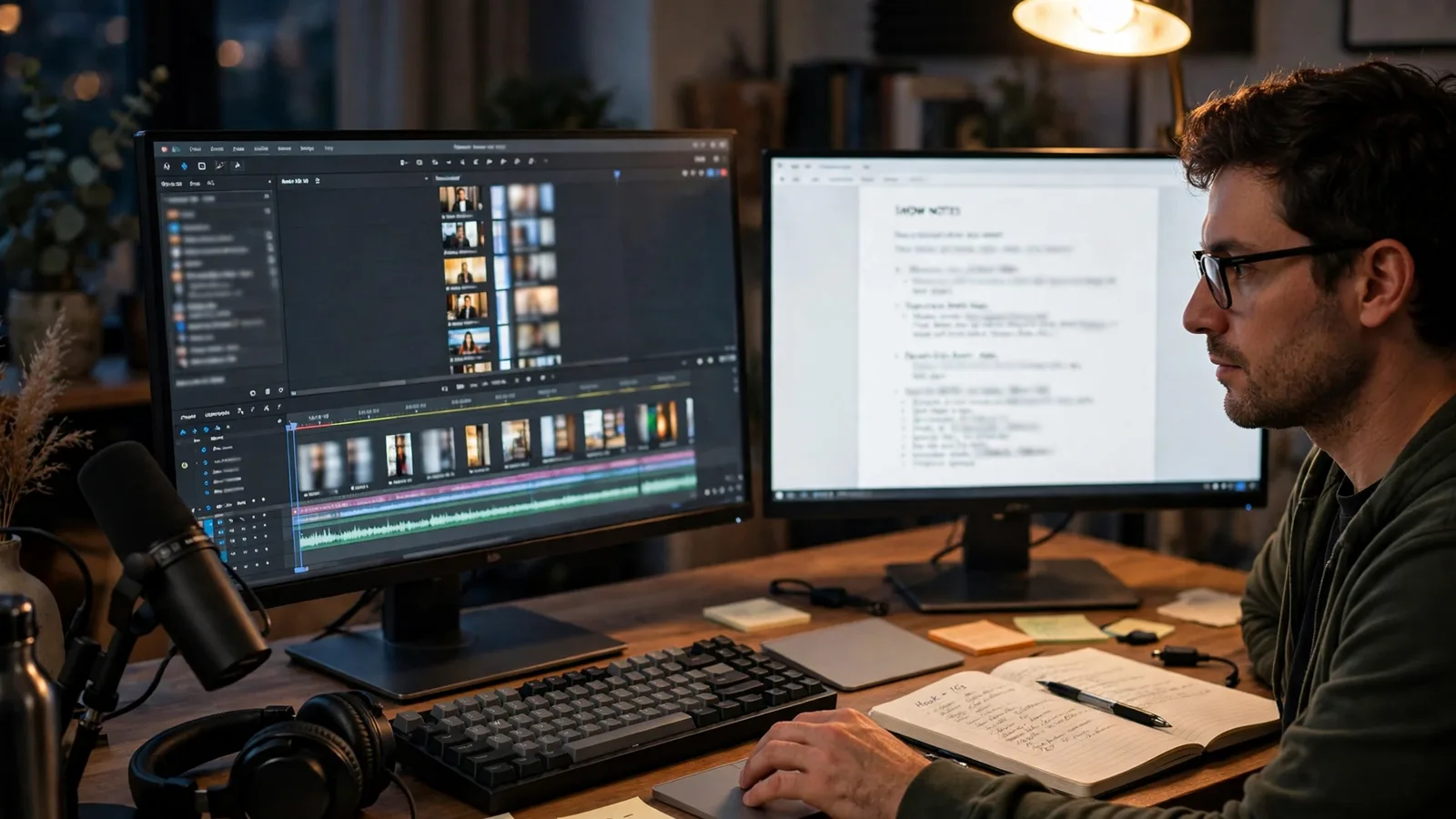
Clips are the front door, so cut them first
Cut two or three clips per episode and no more. Each clip needs one complete thought, a first line that states the point instead of warming up to it, and captions burned in or attached, because a large share of social viewing happens with the sound off. YouTube Shorts accepts videos up to three minutes, and TikTok and Instagram both reward clips that finish, so a tight 40 to 60 second clip that ends on the point beats a two minute clip that trails off.
Post the strongest clip on release day and hold the rest. A second clip two days later and a third at the weekend gives the episode three separate chances in three separate feeds, and each one points back to the full episode. That spread is the whole value of repurposing. One post on release day reaches the people who were online that morning. A week of posts reaches everyone else.
The newsletter issue is already written
Your episode argument is a newsletter issue wearing a costume. Take the turn you marked in the transcript, state it in two or three short paragraphs, add the one story or example that proves it, and close with the episode link and one question readers can answer by reply. That is a complete issue, and it lands in inboxes that no algorithm can throttle.
Hosts stall here because they try to write a second article from scratch. Do not. The episode did the thinking. The newsletter does the carrying. The same rule builds the show notes page. Write the notes from the transcript in plain sentences, name the topics and guests the way a listener would type them into a search box, and the page can rank for searches your audio file never will.
One hour, in order
Here is the working order that keeps this to about an hour. Get the transcript and mark it, ten minutes. Write the clip list from your marks and cut or export the clips, twenty minutes. Draft the newsletter from the marked turn, fifteen minutes. Rewrite the show notes from the same marks, ten minutes. Pull one quote line for a text post, five minutes. Schedule the pieces across the week instead of posting them all on release day.
Batch the step across episodes when you can. Marking transcripts for three episodes in one sitting is faster than three separate sittings, and a month of episodes then feeds a month of posts without a fresh idea ever being required.
What to skip
Skip the pieces that take an hour and return nothing. A full blog post rewritten from every episode is too much for most shows and reads like a transcript with headings. Ten clips per episode burns out the editor and trains followers to ignore the show account. A thread that retells the whole episode gives listeners no reason left to press play. Repurposing works when each piece is a door, not a copy.
One more thing belongs in the week and it is the piece hosts forget. The episode itself should name where listeners can get more. Podcaster Signal turns podcast listeners into email subscribers on a list you control, free for podcasters and listeners, so the audience each clip reaches has somewhere permanent to land.
Frequently asked questions
How many pieces of content can one podcast episode make?
At least six without new recording. Two or three short clips, one newsletter issue built from the episode argument, show notes written for search, one quote post from a real transcript line, an audiogram or captioned still, and one follow up post later in the week.
How long does it take to repurpose a podcast episode?
About an hour once the transcript exists. Mark the transcript for standalone lines and the main turn, cut clips from the timestamps, draft the newsletter from the turn, and rewrite the show notes from the same marks.
What is the best length for a podcast clip?
A tight 40 to 60 seconds works well on TikTok, Instagram and YouTube Shorts, because completion matters and one complete thought fits that span. YouTube Shorts accepts up to three minutes, but a clip that ends on its point holds viewers better than a longer one that trails off.
Should I post all the clips on release day?
No. Post the strongest clip on release day, a second clip about two days later and a third at the weekend. Spreading the pieces gives the episode three separate chances in the feeds instead of one.
Do I need a transcript to repurpose episodes?
It is the fastest starting point there is. Every piece, clips, newsletter, show notes and quote posts, comes from the words. Your host or editor can produce a transcript for most shows, and marking it takes about ten minutes.